

Recent Blog Posts
The Dos and Don’ts of Getting Pulled Over by Police, Part Two: Additional Considerations
 In a previous post on this bog, we discussed some of the ways you can make your experience with the police go smoother and more efficiently when you are pulled over for a traffic violation. Nearly every person who drives a motor vehicle will get pulled over by police at some point. For some, it will be caused by something as minor as a broken taillight, while others will have more dramatic encounters with police. If you are ever pulled over by police, take the following steps to ensure that you do not make the situation more dangerous or difficult than necessary.
Do Not Exit the Car Without Being Told to Do So
Tension between police and citizens have never been higher than in recent years. Prominent cases of alleged police brutality receive copious media attention. For example, many have attributed the 2014 death of Eric Garner to the New York City Police Department. Michael Brown’s death in Ferguson, Missouri led to the public looting of businesses, vandalism of vehicles, arson, first responders being shot at, and violent conflicts between protestors and police.
What is the Difference Between Assault and Battery?
 If you watch any crime television show, it seems like the words assault and battery are always used at the same time, interchangeably. However, these are different crimes with different definitions and characteristics. Knowing the difference between the two is essential if you are charged with one or both of these crimes.
Battery
Illinois law defines battery as causing bodily harm to another or making physical contact that is insulting or provoking to another. The perpetrator must know thathe or she iscausing the offensive touching andhas no legal basis in which to do so.
The most common form of battery is hitting, bunching, or otherwise engaging in harmful physical contact with another. However, a battery can also be an offensive touching to another—physically ripping a purse from someone. The purse is considered an extension of the person who was battered.
Defenses to Theft
 The crime of theft is common in Illinois. Moreover, there areseveral different types of theftwith which an individual can be charged. If you have been charged with any type of theft in the state, it is imperative that you reach out to a talented attorney for help with your case.
Definition of Theft in Illinois
Under Illinois law, a person commits theft when he or she knowingly:
- Takes unauthorized control over another’s property;
- Deceives another to gain possession of their property;
- Threatens another to gain possession of their property;
- Has possession over stolen property with knowledge it was stolen, or should have known that the property was stolen; or
- Exerts control over property of law enforcement, or someone acting on behalf of law enforcement, who inform the individual it was stolen property. Or, law enforcement/a person acting on behalf of law enforcement leads the individual to believe the property was stolen.
The Dos and Don’ts of Getting Pulled Over by Police, Part One: The Basics
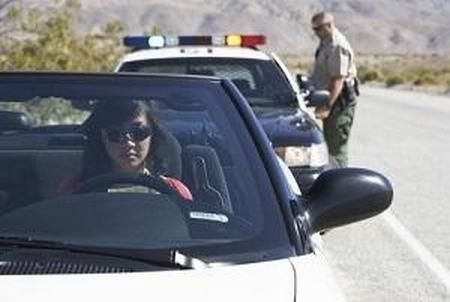 Getting pulled over by police is never a fun thing to go through. One minute you are driving down the road and the next moment you see flashing lights in your rearview mirror. Police can pull a motorist over for a number of reasons including for traffic violations such as speeding, running a red light, or suspicion of drunk driving. If you are pulled over by a police officer, it is important that you take certain steps to ensure your interaction with the officer goes as smoothly as possible.
Do Get Organized Before You Are Pulled Over
It is always a good idea to have your vehicle’s registration, your driver’s license, and proof of insurance in an easily accessible place. If you know where these items are before you are pulled over, it can make the process much faster and easier.
Do Pull Over as Soon as It Is Safe and Cooperate
If you see flashing lights or hear a siren, you should immediately pull over to the right. If the police car drives past you, you can assume the officer is pursuing someone else. If he or she continues to drive behind you, you are probably being pulled over. When there is a chance to do so safely, pull over onto the shoulder of the road. Keep your hands on the steering wheel and roll down the window when asked. The officer will ask for your license and registration. Get those items and hand them to the officer when asked.
Should I Take a Plea Deal?
 Many people have seen an episode of a legal drama on television. A crime is committed, the suspect is arrestedon charges, and then he or she is either found guilty or takes a plea deal.
Television dramas make it seem likethese scenarios arevery black and white—the accused is either found guilty or takes a plea deal. Plea deals are offered to the accused frequently, but rarely are they discussed in detail.
In reality, taking a plea deal is a huge consideration in a criminal case. A plea deal is a negotiation between the defendant and his or her attorney on one side and the prosecutor on the other side. The defendant agrees to plead guilty or no contest to some crimes, in return for a reduction of the severity of the charge or the dismissal of some of the charges. Or, the prosecutorrecommends a reduced sentence that would be given after a trial.
Should I Challenge an Order of Protection?
 Domestic violence is a serious issue in the United States. In Illinois, victims have remedies and options available to them through the Illinois Domestic Violence Act. One such remedy of this is act is an order of protection, also referred to as a restraining order. The court will grant an order of protection to protect the victim. With any system, though, there are flaws. Orders of protection can be granted inaccurately, severely impacting the life of the accused.
Types of Orders of Protection
Illinois law provides three different types of orders of protection:
- Emergency orders. An emergency order is issued, much like it sounds, when there is an emergency. The court does not need to hear testimony from the accused. The accused does not even need to be given notice of the hearing/potential order. These emergency orders last for 21 days. After 21 days there is a hearing in which the accused can attend and respond to the allegations that caused the order.
Frequently Asked Questions About Orders of Protection in Illinois
 Did you know that as many as one in three women and one in four men, on average, will suffer abuse perpetrated by a spouse or domestic partner at least once during their lives? These numbers do not even account for violence or abuse committed by parents, children, siblings, or other family members. Domestic violence is a serious problem for countless families throughout Illinois, and addressing such violence often begins with seeking an order of protection.
Many domestic abuse victims have similar questions about protective orders, including:
Q. What is an order of protection?
A. An order of protection is a court-issued directive that can be issued to protect victims or potential victims of domestic violence from their abuser.
Q. Who can request an order of protection?
A. Because orders of protection are used to address domestic violence concerns, only those with certain types of relationships with the alleged abuser can seek protective orders. This includes current and former romantic partners, individuals who live(d) with the alleged abuser, relatives and children, and anyone with disabilities who receives care from the alleged abuser. Neighbors, friends, acquaintances, and strangers do not have the standing to request an order of protection.
What Does it Mean to Plead “No Contest?”
 If you have been charged with a crime, you must enter a plea to the court. Generally, people think of “guilty” or “not guilty.”However,there are other options, such as “no contest.”
Under Illinois law, a defendant is brought into open court and read the charges against him or her. The defendant then makes a plea pursuant to 725 ILCS 5/113-4, by either pleading guilty, guilty but mentally ill, or not guilty. The statute does not specifically point to the plea of no contest. Because no contest is not stated in the statute, a defendant does not have the right to plead no contest in every criminal case. However, a judge can allow the defendant to make the no contest plea.
What is “No Contest”
No contest comes from the phrase “nolo contendere,” which means “I will not contest.” A no contest plea is very similar to a plea of guilty. In a no contest plea, the defendant does not disagree with the facts of the case, orhis or her role in the crime. The defendant is, however, not admitting guilt. When a defendant pleads guilty,he or she isadmitting their guilt in the crime. The plea of no contest is essentially the defendant accepting the penalties for the crime, but without admitting guilt.
Illinois Automobile Insurance
 If you are pulled over, one of the firstquestions a police officer will ask isto see your license, registration, and proof of insurance. It is essential to carry all three oftheseitems with you in your vehicle.However, what happens if you forget to bring your insurance? Or, what if you do not have automobile insurance?
What Insurance Does Illinois Require?
There are three types of auto insurance required in Illinois. A driver must have both property and liability/bodily injury insurance. Additionally, a driver must carry uninsured motorist bodily injury insurance. The property insurance component of auto insurance is for covering the cost in case you damage another’s property in your vehicle. Most often, this is to cover the damages to another vehicle. Occasionally, however, other property can be damaged. Your insurance policy must cover at least $20,000 of property insurance.
What is an Aggravated DUI?
 In Illinois, the more a person is charged with driving under the influence (DUI), the harsher the penalties get. The different types of DUI charges that are possible in Illinois are outlined in 625 ILCS 5/11-501.
A DUI can be classified as both a felony and misdemeanor. An aggravated DUI is a felony DUI. You can be charged with a felony DUI, even if it is your first DUI arrest or charge.
Proving an aggravated DUI is the same as proving a misdemeanor. The prosecutor must showthat thedefendant broke a law in some way, most often driving with a blood alcohol content of more than 0.08 percent.
In addition to proving a violation of law, there are11 circumstances that can elevate a misdemeanor DUI to an aggravated DUI. The following are the circumstances that make a DUI a felony:

Schedule Your Free Consultation
Arlington Heights Office 3030 Salt Creek Lane, Suite 120 Arlington Heights, IL 60005 Phone: 847-253-3100


At Cosley Law Office, we represent clients in Illinois, including the cities of Rolling Meadows, Schaumburg, Palatine, Arlington Heights, Mount Prospect, Buffalo Grove, Barrington, Elk Grove Village, Inverness, Wheeling, Long Grove and Mundelein, as well as Cook County, Lake County, DuPage County and throughout the Chicago, IL, metropolitan area.
Results listed are not a guarantee or indication of future case results.

© 2026 Cosley Law Office
3030 Salt Creek Lane, Suite 120, Arlington Heights, IL 60005
847-253-3100