

Recent Blog Posts
What Happens if I Violate My Probation?
 When sentencing an individual upon conviction of a charge, a judge often has a variety of options available. One of the most common types of sentencing in Illinois involves placing an individual on probation.
Probation is a sentence that requires a defendant to adhere to certain supervision rules to ensure thatthe defendant isnot committing other crimes andis being rehabilitated afterhis or her conviction. An individual must follow the terms ofhis or her probation exactly, otherwisehe or she could be found inviolation of his or her probation.
Of course, violating probation has consequences. If you have violated your probation, there are defenses and options available to you, and it is in your best interests to contact an attorney immediately for help.
Five Questions You Should Ask a DUI Attorney
 If you have been charged with driving under the influence (DUI) in Illinois, you need a skilled and experienced DUI attorney to handle your case. Finding the right attorney for you is important. An attorney is not one size fits all. Therefore, it is essential to ask any potential DUI attorney questions to ensure that a successful and productive attorney-client relationship will result.
Questions to Ask an Attorney
If you are facing DUI charges, make sure to ask these five questions of any attorney you contact:
- How much experience do you have handling DUI cases? It is important to have an attorney who has experience handling cases like yours. Experience brings about confidence and a knowledge level that can assist you in your case. Additionally, asking the results of different cases can give you an idea of what could happen in your situation.
Why Should I Contact an Attorney if I Get a Traffic Ticket?
 You may not think that a traffic ticket is a big deal,that they happen every day, and that you do not need an attorney if you receive one. This is simply not true. While there are “minor” traffic violations, like running a stop sign or improperly changing lanes, there are still consequences for even the smallest ticket. Hiring an attorney can help you avoid these consequences and keep your driving record clean.
Provide Experience
When you fight a ticket yourself, you are relying on your own experience. If this is your first traffic ticket, or the first time that you are fighting a traffic ticket, you may not know exactly what to do. Even if this is not your first ticket, you likely do not have the same experience that an attorney has in traffic court. An attorney knows the law well and knows how to challenge the validity of a traffic ticket.
When Can the Police Search My Vehicle?
 The Fourth Amendment to the United States Constitution grants us the right be free from unreasonable searches and seizures. Searches are scrutinized to make sure that an individual’s constitutional rights are not infringed upon.
There are numerous cases in which a person is pulled over for a seemingly routine traffic stop, but it results in the search of the individual’s car and a potential arrest if illegal behavior or substances are found. However, a police officer does not always have the right to search your vehicle at just any traffic spot.
Ultimately, if you have been stopped by the police and placed under arrest, it is in your best interests to contact an attorney immediately. To be sure, an experienced lawyer can examine the specifics of your case and begin mounting an aggressive defense.
What Makes Me a Trespasser?
 In Illinois,trespassingcan occur in several waysand include trespass to vehicles, trespass to real property, and trespass through the use of electronic tracking devices. Generally, trespassing is a misdemeanor crime. However, some properties hold a felony charge. One such example is trespassing on government buildings. Trespassing on government buildings will likely result in a felony trespassing charge. The intention behind the trespassing is also considered when assessing the severity of the crime and the appropriate punishments to follow.
Types of trespassing crimes in Illinois include the following:
- Criminal Trespass to Vehicles: Criminal trespass to vehicles is defined as a person entering any part of, or operating, any vehicle, aircraft, watercraft, or snowmobile. The individual must knowingly enter the vehicle and must not have any authority to do so.
What is Disorderly Conduct in Illinois?

Facing charges of disorderly conduct can be a truly frightening experience. To be sure, you may not understand the charges, nor how to effectively deal with the criminal justice system. If you find yourself in this situation, it is in your best interests to contact an attorney immediately. A legal professional can advocate aggressively on your behalf to help protect your rights throughout each step of the process.
What is Disorderly Conduct?
Under Illinois law, there are12 instances in which you can be charged with disorderly conduct. These actions are:
- Acting in way that disturbs another and provoke a breach of peace;
- Reporting, or inciting another to report a fire when the individual knows that there is no fire;
A Dangerous Loophole in Cell Phone Laws: Onboard Infotainment Systems
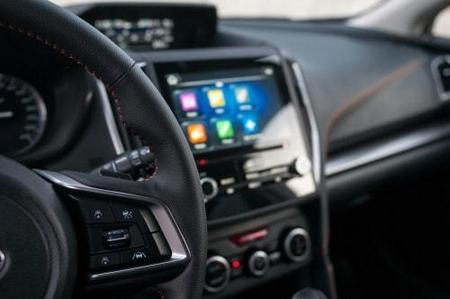 By now, most drivers are aware that using a cell phone while driving is a dangerous proposition. Public awareness campaigns around the country have been urging drivers for years to put their phones down when behind the wheel for the sake of the safety. In addition to being unsafe, using a hand-held cell phone while driving is also illegal in many jurisdictions, including Illinois. If you are caught using a hand-held electronic device for talking or texting, you can be cited and fined up to $75 for a first offense.
Understanding the Law
That statute that governs the use of cell phones while driving in Illinois actually applies to a wide range of "electronic communication devices," including personal digital assistants (PDAs), electronic tablets—such as iPads—laptop computers, and of course, "hand-held wireless telephones." The law expressly states that the limitation on the use of electronic devices while driving does not apply to GPS devices, navigation systems, or any "device that is physically or electronically integrated into the motor vehicle." Unfortunately, systems that fall into the last category have become increasingly popular in recent years, and the dangers are only growing.
Can I Get a DUI on a Bike in Illinois?
 After drinking too much, the worst decision is to getinto a vehicle and drive. Taking a cab, ride share, or otherwise getting a ride home is the best option. However, some peoplemay want to ride their bike home after having a bit too much to drink.This option is safer than drivinga car; however, there are safety risks to riding a bike under the influence. Additionally, whilethere are certainly dangers to riding a bike under the influence of alcohol, and other states give DUIs to bike riders, you will not receive a DUI charge.
Illinois DUI Laws
Illinois DUI statute states that “a person shall not drive or be in actual physical control of any vehicle” while having a blood alcohol concentration of 0.08% or more. The definition of vehicle under Illinois law is a device that transports a person or property, “except devices moved by human power.” By definition, a bike is not categorized as a vehicle. A bike is “moved by human power.”
What Does it Mean to be “In Custody”
 The Fifth and Sixth Amendments to the United States Constitution give an individual the right to avoid self-incrimination and to consult an attorney. While these rights are in the Constitution, they were not always enforced or followed strictly.
In the Supreme Court case of Miranda v. Arizona, the Court reinforced that an individual has the “right to remain silent” and to consult an attorney. These rights are more commonly known as your “Miranda Rights.”
If the police take you into custody, they must inform you of your rights. There is no question that the rights must be read; however, the idea of a suspect being “in custody” is a vague term. Custody has come to mean being questioned or interrogated by the police after being taken into custody or otherwise deprived of freedom of action in any significant way.
What is the Process for Expunging a Juvenile Record in Illinois?
 Childhood should be a time of growth and learning. Unfortunately for some children, their childhood is spent in and out of courthouses and juvenile detention centers. The premise behind rehabilitating those who commit crimes is to give them a second chance in life. With this thought in mind, who deserves a second shot more than a child?
A juvenile is someone who is under the age of 18. Each timea person is arrested, a record is createdand consists of a police report, computer database reports, or any other court document that is created in connection with the arrest or charge. All law enforcement and court records with cases involving juveniles are sealed.
A sealed record means that most people are not able to view the records,as theymay be able to with adult records. Even though the records are sealed, there arevarious instanceswhere potential employers could see the records.However, one way to avoid sealed records being seen is through a process called expungement.

Schedule Your Free Consultation
Arlington Heights Office 3030 Salt Creek Lane, Suite 120 Arlington Heights, IL 60005 Phone: 847-253-3100


At Cosley Law Office, we represent clients in Illinois, including the cities of Rolling Meadows, Schaumburg, Palatine, Arlington Heights, Mount Prospect, Buffalo Grove, Barrington, Elk Grove Village, Inverness, Wheeling, Long Grove and Mundelein, as well as Cook County, Lake County, DuPage County and throughout the Chicago, IL, metropolitan area.
Results listed are not a guarantee or indication of future case results.

© 2026 Cosley Law Office
3030 Salt Creek Lane, Suite 120, Arlington Heights, IL 60005
847-253-3100