

Recent Blog Posts
How Moving in With a New Partner Will Affect Your Spousal Maintenance
 If you are receiving spousal maintenance, you probably know—or, at least, assume—that your former spouse’s financial obligations to you will end in that event you ever get remarried. It only makes sense. When you get remarried, you become financially interdependent with your new spouse, all but making your ex all but irrelevant—children’s needs notwithstanding.
Depending on your situation and your desires, however, you may be inclined to shy away from marriage for a time after your divorce, as your last formal commitment may have soured you a bit on the institution. As an alternative to getting married, you may decide to move in with your new partner, but you should know that, in most cases, cohabitation is grounds for ending spousal maintenance as well.
A Growing Trend
Evolving social mores and more liberal views on interpersonal relationships have led to an increasing number of unmarried couples living together. Many choose the arrangement as a precursor to marriage, while others are content to remain cohabiting indefinitely. While sociologists and religious authorities continue to debate the morality of cohabitation, legal systems around the country have been forced to contend with the changing concepts of household and family.
Tips to Avoid a DUI This Holiday
 The Illinois State Police (ISP) are warning drivers that, as the holidays approach, they still must remain safe on the roads. In a news story, the ISP have warned drivers that they will be looking for motorists that are under the influence, distracted while driving and drivers that do not wear their seat belts. The worst of these infractions is certainly a DUI, so below are a few tips on how to avoid getting one of these charges.
Learn of DUI Checkpoints Ahead of Time
Of course, it is going to be much harder to avoid a DUI if you have to make it through a DUI checkpoint. Of course, no one should be driving while under the influence, but law enforcement at these checkpoints also often want to simply make arrests, whether a person is guilty or not. So, to avoid them, download an app such as PhantomAlert that can tell you where the roadblocks are.
Do Not Drive Drowsy
Co-Parenting Tips for Divorcing Parents
 If you are getting a divorce or have decided for certain to end your marriage, you may have apprehensions about how you and your spouse will raise your children. If you want to share parental responsibilities and parenting time, formerly called custody and visitation, you will need to find a way to co-parent that meets your child’s needs. Of course, cooperating with an ex-spouse can be extremely difficult. No co-parenting arrangement is perfect, but there are some things you can to do help make your co-parenting relationship with your ex as amicable and effective as possible. Read on to learn some of the top co-parenting tips from child development and mental health experts.
Do Not Disrespect Your Ex in Front of Your Children
It can be nearly impossible to keep quiet about frustrations involving an ex-spouse. If your marriage ended because of infidelity, deceit, or another hurtful behavior, you may be understandably furious at your ex-spouse. However, bad-mouthing your ex in front of your children will only make the situation worse. Children who hear parents talking negatively about each other may feel like they have to choose sides. Furthermore, when a parent talks badly about the other parent to the point that it encourages a child to turn against the other parent, it can be considered "parental alienation." In extreme cases, parental alienation can lead to the loss of your parental rights.
What Happens if I Am Caught Driving with a Suspended License?
 There are many reasons a person may have their license suspended, or even revoked, in Illinois. A DUI conviction will certainly strip someone of their license, even for a first offense. Sometimes a lesser offense, such as failing to pay traffic tickets, is enough to have a license suspended. Whatever the reason for it, many people mistakenly believe that driving on a license that has been suspended or revoked does not come with serious consequences. They believe that if they are caught, it will be like any other minor traffic offense, and the most they will face is a fine. That is wrong.
Driving on a suspended or revoked license is a serious offense. Depending on the circumstances, you could even face jail time for it.
Penalties for Driving with a Suspended License
There are many penalties associated with driving on a suspended license. The offense is outlined in the Illinois Vehicle Code, Section 6-303. Under this statute, the offense is considered a Class A misdemeanor and could result in a maximum of 364 days in jail and a maximum fine of $2,500. Individuals convicted also have to pay mandatory court costs.
How Can a Juvenile Conviction Affect College Admissions?
 Regardless of how stellar a student’s high school transcript is, and no matter how well they scored on the SATs, if they have any type of juvenile conviction on their record, it will make it much more difficult for them to get into college. This is just one of the consequences of being convicted of a crime, even if that conviction came in the form of adjudication in the juvenile system.
So, if your child has been adjudicated, how will it affect their chances of getting into the school of their dreams? How can you help ensure they will not feel those consequences?
Criminal History Questions on College Applications
Approximately half of all public colleges and universities will ask about a student’s criminal history on their applications for admittance. This number increases to between 60 to 80 percent for private institutions. Approximately half of all two-year community colleges will ask students about their criminal background, while most four-year colleges will conduct a full background check.
Preparing for Your Illinois Divorce
 If you ask five family members or friends for advice on what to do in preparing for your divorce, you are likely to get five different answers. This is not because any of them wrong necessarily, but because there are many important factors to consider and steps to take. Similarly, the Internet is full of advice and checklists for divorcing individuals, but before you take action, it is important to take stock of what you have, what you want, and what it will take to get there.
Save Some Money
As you get ready to file your petition for divorce, you will need to have some money put aside for a variety of expenses. This is especially true if you have become accustomed to a lifestyle that relies on two incomes. Very soon, you may be forced to be self-reliant, and if your monthly income cannot meet your monthly needs, you will need to have savings. Remember that during the divorce process, you may need to find a new place to live, buy new household goods or furniture, or hire an attorney. All of these things cost money and you need to be prepared.
What Not to Do if You Are Arrested
 Being arrested is a very scary thing. Law enforcement in Rolling Meadows arrest people every day, and these individuals often do not know what to do when it happens. Just as there are certain things you should do, there are also things you should never do. Taking the wrong steps at this point could hurt your case in the future. Below are the five things you should never do if you are arrested.
Do Not Say Anything
If you are arrested, you have the right to remain silent and that is exactly what you should do. When police read you your Miranda rights, they will tell you that anything you say could be used against you, and they mean it. The chances are very good that they will take your words out of context and use it to hurt your case in court. Do not say anything to police officers except that you want to speak to an attorney.
Do Not Resist Arrest
Resisting arrest is a very dangerous thing to do in Illinois. Even trying to swat away the officer’s hands when they are trying to put handcuffs on you could result in additional charges if the officer views it as assault. Also, if law enforcement believes that you are resisting arrest, they have the right to subdue you, which can quickly become dangerous.
Understanding Equitable Distribution in an Illinois Divorce
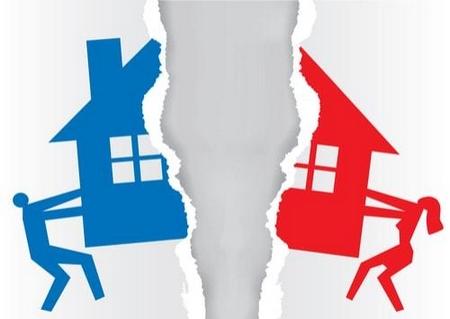 When a couple gets divorced, everyone "knows" that each spouse is entitled to half of everything the couple owns, including the property that each party brought with them into the marriage. This idea is repeated as fact in countless movies, television programs, and informal advice forums. Such an assumption, however, about how property is divided in a divorce is, at best, misguided and, at worst, completely inaccurate—at least in the state of Illinois.
Equal Division Is Not Guaranteed
Illinois is known as an equitable distribution state when it comes to dividing property in a divorce. Equitable is not the same as equal, and the distinction is very important. The principles of equitable distribution—and Illinois law—require marital property to be divided in a manner that is fair and just. To determine what is fair and just, the circumstances of the marriage, divorce, and expected post-divorce situation must be taken into account.
Can Police Search Your Phone?
 Imagine police pulled you over in a traffic stop. Maybe they suspect you of a DUI, or maybe they want to cite you for having a broken taillight. Whatever the reason, they approach your window and begin to question you. They may even become aggressive and demand that you hand over your phone. Perhaps they even order you to unlock it for them or provide them with your password. This is a scary situation, as everyone has personal and confidential information on their phones these days. The question is, are police allowed to search your phone?
U.S. Supreme Court Decides on Cell Phone Searches
In 2014, the U.S. Supreme Court heard the case of Riley v. California. The defendant had been stopped by police for expired registration tags on his vehicle. During the stop, the officer also learned that the defandant’s driver’s license was suspended and that he was carrying a number of firearms in his car. The officer also took his phone, which the officer claimed had further incriminating evidence on it.
How Life Insurance Can Be Used as Security in a Divorce Case
 For many individuals, it takes a divorce to realize just how financially dependent a person may be on his or her spouse. This, of course, may be all the more true if you are also trying to raise children. It is for exactly such reasons that the divorce laws in Illinois include provisions for spousal maintenance and child support. These orders are issued, when appropriate, by the court to distribute the financial burden more equitably between you and your ex-spouse. But, what would happen if your ex-spouse was no longer around to provide support for you or your children? Would you be able to get by? If the answer is no, you may want to speak with family law attorney about including life insurance requirements in your divorce agreement.

Schedule Your Free Consultation
Arlington Heights Office 3030 Salt Creek Lane, Suite 120 Arlington Heights, IL 60005 Phone: 847-253-3100


At Cosley Law Office, we represent clients in Illinois, including the cities of Rolling Meadows, Schaumburg, Palatine, Arlington Heights, Mount Prospect, Buffalo Grove, Barrington, Elk Grove Village, Inverness, Wheeling, Long Grove and Mundelein, as well as Cook County, Lake County, DuPage County and throughout the Chicago, IL, metropolitan area.
Results listed are not a guarantee or indication of future case results.

© 2026 Cosley Law Office
3030 Salt Creek Lane, Suite 120, Arlington Heights, IL 60005
847-253-3100